Stories worth the long way home.
Original long-form reads where folklore, documented history and a strong sense of place stay in the same story without pretending they are the same thing.

Why They Call the Outer Banks the Graveyard of the Atlantic
The name sounds like tourism copy until you understand the shoals, currents, storms, war and hundreds of wrecks behind it. The Outer Banks earned its dark maritime reputation the hard way.
Read full story →
Why Bonaventure Feels Like Old Savannah: Cemetery Landscape, Memory and Folklore
Bonaventure Cemetery’s moss-draped roads and elaborate monuments feel almost designed for ghost stories, but its real history explains why the Savannah landscape carries so much atmosphere.
Read full story →
When the Bell Rang in Cades Cove: Death, Cemeteries and the Memory Behind Smokies Ghost Lore
Long before visitors told ghost stories about Cades Cove, death was a community event announced by church bells and answered by neighbors. The surviving cemeteries make that older relationship with the dead visible.
Read full story →
What Lies Under Lake Lanier: The Real Displaced Landscape Beneath Georgia’s Haunted-Lake Reputation
Lake Lanier’s haunted reputation often begins with talk of roads, buildings and cemeteries beneath the water. The real history of the reservoir is more complicated—and more interesting—than a simple 'drowned town' legend.
Read full story →
West Virginia Penitentiary: The Gothic Prison Where Violence Became Part of the Building’s Reputation
Moundsville’s massive stone penitentiary operated from 1876 to 1995, holding generations of prisoners through executions, overcrowding and riots. Its paranormal reputation arrived on top of a documented history already difficult enough.
Read full story →
Waverly Hills: The Tuberculosis Hospital Behind One of America’s Most Famous Hauntings
Waverly Hills is often introduced through shadow people and the so-called body chute. Its real history begins with a city fighting tuberculosis before antibiotics changed medicine forever.
Read full story →
Under the Old Exchange: Charleston’s Provost Dungeon Has Enough Real History Without Inventing a Ghost
Beneath one of Charleston’s best-known colonial buildings is a place tied to war, imprisonment, slavery and political power. The Provost Dungeon’s documented history is darker than most ghost-tour scripts need it to be.
Read full story →
Trans-Allegheny Lunatic Asylum: How a Hospital Built for 250 People Ended Up Holding More Than 2,400
Weston’s enormous stone asylum began with a reform-era belief that architecture, sunlight and fresh air could help people heal. A century later, overcrowding had turned that promise inside out.
Read full story →
The Tuberculosis Hospital Inside Mammoth Cave: When Patients Went Underground Looking for Air That Could Save Them
In the 1840s, a physician moved tuberculosis patients into Mammoth Cave believing its constant underground air might cure them. The experiment failed, but stone huts still mark one of the cave’s strangest chapters.
Read full story →
The Pittee Girls of St. Augustine Lighthouse: The Tragedy Beneath the Ghost Story
The St. Augustine Lighthouse’s best-known ghost story began with a documented 1873 construction accident. The real lives behind the legend make the story far more haunting than a simple paranormal tale.
Read full story →
The Myrtles Plantation and Chloe: What Happens When a Ghost Story Becomes More Famous Than the Historical Record
The Myrtles is one of America’s most famous haunted houses, and the story of Chloe is central to its reputation. The trouble is that the legend has traveled much more cleanly than the evidence behind it.
Read full story →
The Lost Colony of Roanoke: What the Word CROATOAN Actually Tells Us
Roanoke is often retold as a supernatural disappearance, but the surviving clues point toward people making desperate choices on a difficult coast. The mystery becomes better when the real evidence is allowed to stay complicated.
Read full story →
The Gray Man of Pawleys Island: The Ghost Who Comes Before the Storm
On the South Carolina coast, the Gray Man is not remembered as a spirit who scares people away from the beach. He is remembered as a warning—one that is said to arrive before the worst hurricanes.
Read full story →
The Devil’s Tramping Ground: North Carolina’s Bare Circle and the Stories People Put Inside It
In the woods of Chatham County sits a barren circle that has carried a devilish reputation for generations. The ground is real, the folklore is older than most visitors—and the best part of the story is how the two became inseparable.
Read full story →
The Crescent Hotel’s Darkest Story Is Not a Ghost: It Is Norman Baker’s Fake Cancer Cure
Eureka Springs’ Crescent Hotel is marketed as one of America’s most haunted hotels, but the most disturbing chapter is documented: a flamboyant fraud turned the resort into a cancer hospital and sold desperate patients a cure he did not have.
Read full story →
The Carroll A. Deering: The Ghost Ship That Reached the Outer Banks Without Its Crew
In January 1921, a five-masted schooner grounded on Diamond Shoals under full sail with no crew aboard. The disappearance became one of the Outer Banks’ strangest real maritime mysteries.
Read full story →
The Bell Witch: How One Tennessee Haunting Grew Into a National Legend
The Bell Witch story has been told for two centuries, but the version most people know today was built layer by layer. Separating early tradition from later additions makes the legend more interesting, not less.
Read full story →
Sloss Furnaces Before the Haunting: Iron, Labor and Birmingham’s Industrial Memory
Before Sloss Furnaces became a paranormal-TV favorite, it was an enormous working iron plant. Understanding the labor and industrial history makes the after-dark reputation far more meaningful.
Read full story →
Savannah, 1820: The Year Fire and Yellow Fever Hit the Same City
Savannah’s haunted reputation is usually told one house at a time. In 1820, disaster worked at city scale: a massive fire left much of Savannah in ruins, and a yellow fever epidemic killed hundreds more.
Read full story →
Sarah Winchester and the House That Would Not Stop Growing
The Winchester Mystery House is famous for stairways to nowhere and rooms that seem to contradict one another. The stranger story is how grief, wealth, rumor and thirty-six years of construction turned one woman into an American legend.
Read full story →
Robert the Doll: How a Key West Toy Became an Object People Still Apologize To
Robert is not a doll that disappeared into folklore after his owner died. He sits in a Key West museum receiving visitors—and, famously, apology letters from people who believe they treated him badly.
Read full story →
Pensacola Lighthouse: War, Hurricanes, Lightning and the Ghost Stories at the Top of 177 Steps
Pensacola Lighthouse has survived Civil War fire, hurricanes, lightning strikes and an earthquake. Its modern haunted reputation grew on top of a maritime history that was already dramatic enough.
Read full story →
Mothman and the Silver Bridge: How a West Virginia Creature Became Tied to a Real Disaster
Point Pleasant’s Mothman sightings began in 1966. Thirteen months later, the Silver Bridge collapsed and killed 46 people. The two events became inseparable in folklore even though engineers found a physical cause for the disaster.
Read full story →
Madame Lalaurie: The Real Horror at 1140 Royal Street Was Already Bad Enough
The LaLaurie mansion became one of New Orleans’ most infamous haunted addresses after an 1834 fire exposed the abuse of enslaved people inside. Later writers added grotesque details the contemporary record does not support.
Read full story →
Laurel Grove South: The Savannah Cemetery Story Ghost Tours Too Often Skip
Laurel Grove South holds one of Savannah’s most important African American burial landscapes. Its history adds depth to a city whose haunted reputation too often centers only on the most photographed cemeteries.
Read full story →
Knoxville’s Gay Street Was Wild Enough Without a Ghost Story
Civil War violence, political conflict and a three-man gunfight gave downtown Knoxville more documented drama than many supposedly haunted streets. Old Gray Cemetery still holds some of the names.
Read full story →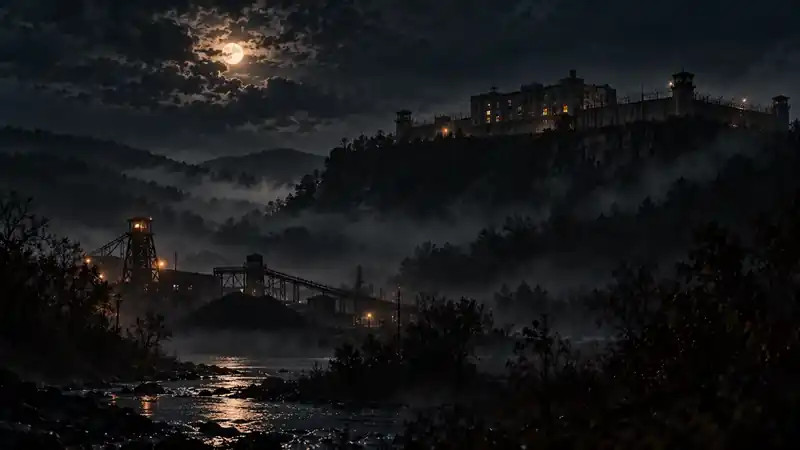
From the Coal Creek War to Brushy Mountain: The Labor Conflict Behind Tennessee’s Prison
The story behind Brushy Mountain begins with coal, convict leasing and the Coal Creek War—not with a ghost hunt. Here is the dark history that shaped the prison long before paranormal tourism arrived.
Read full story →
Fort Pulaski: A Fortress That Became a Prison, a Refuge and a Place of Freedom
Fort Pulaski is often remembered for its Civil War bombardment, but the deeper story includes Confederate prisoners, freedom seekers escaping slavery and a fort whose meaning changed with the people passing through its walls.
Read full story →
Eastern State Penitentiary: The Prison Built to Reform People by Leaving Them Alone
Eastern State was designed as a humane revolution: silence, work and isolation were supposed to create repentance. Instead, its radical system became one of the most disturbing experiments in American prison history.
Read full story →
Devil’s Den at Gettysburg: The Famous Dead Sharpshooter Photograph Was Staged
One of the Civil War’s most haunting photographs shows a dead Confederate soldier among the rocks at Devil’s Den. Research revealed that photographers moved his body to create the image Americans remember.
Read full story →
Colonial Park Cemetery: Savannah’s Crowded Ground, Altered Stones and Two Centuries of Storytelling
Savannah’s Colonial Park Cemetery held more than nine thousand graves in only six acres. The real history is dense enough before you reach the famous stories of altered headstones and wandering spirits.
Read full story →
Chickamauga: Why a Quiet Georgia Forest Became One of America’s Darkest Battlefield Landscapes
The Battle of Chickamauga left roughly 35,000 men killed, wounded, missing or captured in wooded north Georgia terrain. The landscape’s modern ghost reputation begins with how confusing and intimate the real fighting was.
Read full story →
Castillo de San Marcos: The Stone Fort That Became a Prison for People Taken Far From Home
St. Augustine’s famous coquina fort survived sieges and changing empires, then entered some of its darkest years as Fort Marion, where Seminole, Plains and Apache prisoners were confined by the United States.
Read full story →
Brown Mountain Lights: The North Carolina Mystery That Kept Surviving Its Explanations
For more than a century, people have watched strange lights appear around Brown Mountain. Scientists, government investigators, tourists and locals have all tried to explain them—and the legend still refuses to go dark.
Read full story →
Bodie: The California Ghost Town Preserved in ‘Arrested Decay’
Bodie is a real ghost town, not because every building is haunted but because California deliberately preserves what remains without restoring it into something new. That unfinished feeling has produced legends of its own.
Read full story →
Bloody Lane at Antietam: How an Ordinary Farm Road Became One of the Civil War’s Most Terrible Places
Before September 17, 1862, the Sunken Road was simply a worn farm lane outside Sharpsburg. Three hours of combat and thousands of casualties gave it the name it still carries.
Read full story →
Andersonville: 45,000 Prisoners, Nearly 13,000 Dead and a Spring Men Called Providence
Camp Sumter operated for only fourteen months, yet Andersonville became the darkest symbol of Civil War captivity. Inside the stockade, one sudden spring of clean water became a story survivors remembered as an answer to prayer.
Read full story →
Alice Flagg and the Ring: How a Murrells Inlet Love Story Became a Coastal Ghost Legend
The Alice Flagg legend has survived for generations along South Carolina’s Hammock Coast, built around a forbidden romance, a missing ring and the idea that some grief never quite leaves the marsh.
Read full story →