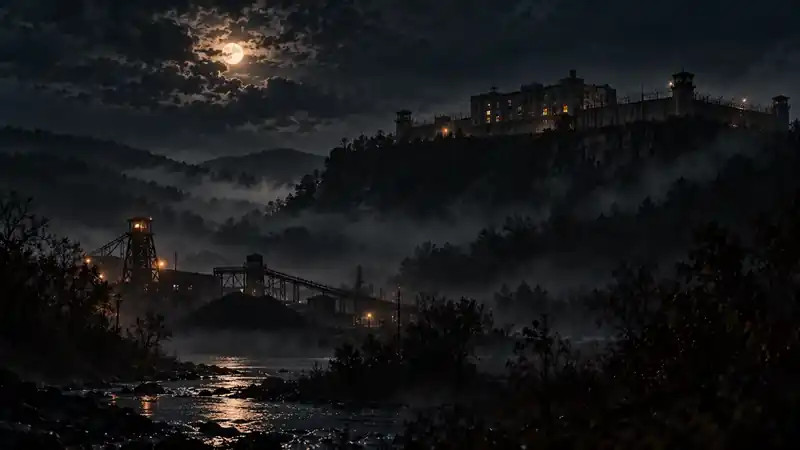
Long before visitors told ghost stories about Cades Cove, death was a community event announced by church bells and answered by neighbors. The surviving cemeteries make that older relationship with the dead visible.
Imagine hearing the church bell count a life
In the Cades Cove community, a death did not arrive as a private notification on a phone. The National Park Service records a tradition in which a church bell was rung to gather attention, followed by a pause and then a ring for each year of the dead person’s life. Neighbors who already knew who was ill could often tell from the count who had died.
That image changes the atmosphere of the cove. A bell crossing an open valley is not a ghost story. It is a communication system, a ritual and a way of telling an entire community that someone’s life has ended.
Neighbors did the work that death required
The death of a community member activated a network of labor. Men dug graves and made coffins when needed. Women prepared the body and helped prepare the household. Neighbors cooked meals, cared for children and handled farm tasks for the grieving family. Death was difficult, but it was not outsourced far away from daily life.
That closeness matters when modern visitors describe old mountain communities as unusually comfortable with ghosts. The people of Cades Cove did not need supernatural beliefs to live near death. Cemeteries were visible parts of the same landscape as churches, homes, farms and roads.
The cemeteries did not stop belonging to families when the park arrived
Great Smoky Mountains National Park protects more than 150 cemeteries. Some remain active for descendants who meet eligibility requirements. In Cades Cove, Methodist and Missionary Baptist cemeteries are among the sites where limited family burials can still occur.
That continuity is easy for tourists to miss. The headstones may look like preserved artifacts inside a national park, but many belong to family histories that never ended. The park did not turn every cemetery into an abandoned place. In some cases, descendants still return for the same reason their ancestors did.
Why ghost stories gather around the cove
Cades Cove has nearly every visual ingredient people associate with Appalachian haunting stories: old churches, cabins, graveyards, mountain fog, narrow roads and long stretches where modern buildings disappear. When traffic thins and the light changes, the valley can feel much farther from the present than it really is.
That atmosphere encourages stories. A sound outside a cabin becomes footsteps. A shape in the fog becomes a figure. A cemetery seen at dusk invites speculation about who might still be walking. Some tales may preserve older oral tradition; others are modern reactions to a landscape designed by history rather than by a haunted attraction.
The real burial landscape is more interesting than a generic ghost
The National Park Service describes historic cemeteries as some of the last tangible links to communities whose houses and farms may otherwise have disappeared. Graves reveal family networks, religious traditions, cultural influences and the development of settlements. In other words, a cemetery is evidence.
That evidence gives a visitor something a spooky anecdote cannot. Instead of asking only whether a light between the trees was a ghost, you can ask whose families lived nearby, which church they attended, how death was handled and why particular burial grounds survived when so much else changed.
A park can preserve a place without freezing it
The creation of Great Smoky Mountains National Park required land purchases and the departure of many residents. Historic structures were preserved selectively. Roads and visitor facilities changed how people moved through the valley. Yet cemeteries created obligations that outlasted property transfer because family relationships did not vanish with deed lines.
That tension—between preserved landscape and living memory—is part of what makes Cades Cove powerful. Visitors are looking at a historic district, but descendants may be looking at home.
If the cove feels haunted, start with the bell
You can enjoy mountain ghost lore without pretending every unexplained noise has a supernatural source. The documented traditions are already vivid enough. Picture the church bell ringing across the valley and neighbors stopping to count. Picture men gathering tools for a grave and women preparing food for a household that had just lost someone.
That is not a horror story. It is something older and quieter: a community refusing to let death happen alone.
Sources and trip planning
- National Park Service — History of Cades Cove ↗
- National Park Service — Burial Landscapes ↗
- National Park Service — Burials in Great Smoky Mountains National Park ↗
Documented history, folklore, first-person paranormal reports and promotional claims are different categories. We keep them labeled separately and link practical visitor details back to current sources.